By Noha Bouazizi
Short movie «Bou Hacine» directed by Fatma Ben Ammar
Dogs, trash piles, and graffiti art inhabit the streets of Bouhssine.
These images flash by at a fast pace. The streets are also inhabited by young rappers. The pace slows down, and they speak freely to the director. They tell of their struggles in the music industry.
Dreams are shared. Rappers are many.
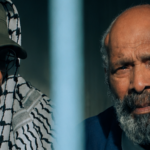
Suddenly, midway through, a new figure appears. A ”friend of the boys”. A sheikh. He is filmed in his room. An intimate setting – in sharp contrast with the large neon-lit space where the artists testified.
He blesses rap music, approves of the boys’ conduct, and declares that he considers them “like his children”.
After this religious interlude, the film snaps back to the rappers’ testimonies. Unsurprisingly, the very next rapper assures us that he is religious, as are his parents.
This begs the question: what role does the Sheikh play here? Why is a “friend of the boys” included in a documentary about rap music in a rough Tunisian neighborhood?
Perhaps he is considered a crafter of words like them? Perhaps a figure of familial authority? A symbol of societal and religious acceptance? Perhaps all at once.
It is undeniable that the documentary tells very moving stories of music-making hardships; from production, to funding, to family support.
But the scenes with the Sheikh, placed in the middle, feel like a detached anchor point, an external validation imposed on the otherwise smooth narrative.
Why must a religious figure endorse rap in order for it to be accepted on screen?